Garage Door Replacement
When a door has reached the end of its service life, replacement restores appearance, insulation, security and smooth daily operation.
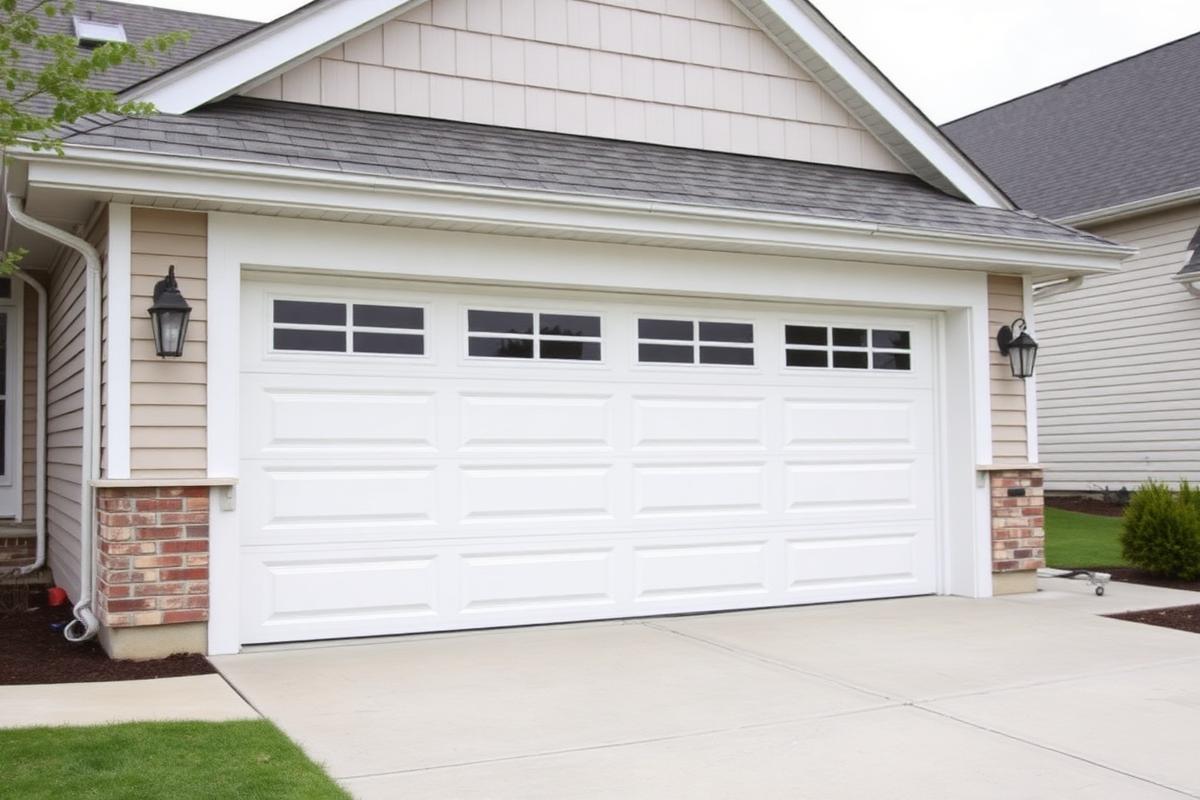
Replacement makes sense when repair costs stack up, when multiple sections are damaged or corroded, or when an older door no longer suits the house or the way the space is used. It is also the moment to reconsider insulation, window options, hardware style and how quietly the door runs.
The process starts with accurate measurement — opening width and height, headroom, backroom, side clearance and the existing spring and track configuration. Those dimensions determine which doors and which track systems will fit.
Old door removal, spring system sizing, track installation and opener setup are all part of the job. If the existing opener is being kept, it is checked and re-set for the new door's weight.
Common signs
- Repairs are becoming frequent and cumulative
- Multiple sections are damaged or rusted through
- The door is uninsulated and the garage is used year-round
- The door looks dated compared with the rest of the home
- The door is heavy, loud and rough in operation
- Replacement sections are no longer available
Common causes
- Age and accumulated cycles
- Corrosion from salt and moisture exposure
- Impact damage across multiple sections
- Original builder-grade door reaching end of life
- Changing use of the garage as living or work space
- Desire for better insulation and quieter operation
Our inspection
- Measure opening, headroom, backroom and side clearance
- Assess existing track and spring configuration
- Check jamb, header and framing condition
- Evaluate the existing opener for reuse
- Discuss insulation, style, window and hardware options
- Confirm the correct spring specification for the new door weight
The process
- On-site measurement and options review
- Order the selected door and matching hardware
- Remove and dispose of the existing door
- Install new track, sections, hardware and counterbalance
- Set spring tension and balance the door
- Connect and calibrate the opener, then test safety features
Risks of delaying service
- Continuing to repair a failing door costs more over time
- A corroded door can fail structurally under load
- An old, unbalanced door shortens opener life
- Poor sealing and no insulation raise comfort issues year-round
Related components
- Door sections
- Track and hardware
- Torsion spring system
- Rollers, hinges and struts
- Weather seals
- Opener and controls
Where this service applies
Single and double residential openings, detached garages and outbuildings.
Frequently asked questions
- Should I repair or replace my garage door?
- If the panels are sound and the failure is hardware-related, repair is usually the better value. Replacement makes sense when sections are damaged or corroded, parts are unavailable, or repairs keep recurring.
- Do I need a new opener with a new door?
- Not necessarily. An existing opener in good condition can often be reused, though it is inspected and re-calibrated for the new door's weight.
- Is an insulated door worth it?
- It depends on how the garage is used. Insulated doors are typically quieter and add thermal separation, which matters most for attached garages and heated shops.
Garage Door Replacement near me in Northeast Ohio
Searching for garage door replacement near me? Garage Door Medic is a mobile garage door company based in Chardon, Ohio, serving homeowners across Geauga, Lake, Cuyahoga, Portage and Ashtabula counties. Pick your community below for local details, or call 440-478-5350.
Garage Door Replacement in Geauga County County
- Garage Door Replacement Chardon, OH
- Garage Door Replacement Chesterland, OH
- Garage Door Replacement Middlefield, OH
- Garage Door Replacement Burton, OH
- Garage Door Replacement Bainbridge, OH
- Garage Door Replacement Newbury, OH
- Garage Door Replacement Russell Township, OH
- Garage Door Replacement Munson Township, OH
- Garage Door Replacement Auburn Township, OH
- Garage Door Replacement Claridon Township, OH
- Garage Door Replacement Novelty, OH
Garage Door Replacement in Lake County County
- Garage Door Replacement Mentor, OH
- Garage Door Replacement Painesville, OH
- Garage Door Replacement Willoughby, OH
- Garage Door Replacement Eastlake, OH
- Garage Door Replacement Wickliffe, OH
- Garage Door Replacement Willowick, OH
- Garage Door Replacement Kirtland, OH
- Garage Door Replacement Madison, OH
- Garage Door Replacement Perry, OH
- Garage Door Replacement Fairport Harbor, OH
- Garage Door Replacement Concord Township, OH
- Garage Door Replacement Mentor-on-the-Lake, OH
Garage Door Replacement in Cuyahoga County County
- Garage Door Replacement Cleveland, OH
- Garage Door Replacement Euclid, OH
- Garage Door Replacement Cleveland Heights, OH
- Garage Door Replacement University Heights, OH
- Garage Door Replacement Beachwood, OH
- Garage Door Replacement Solon, OH
- Garage Door Replacement Mayfield Heights, OH
- Garage Door Replacement Lyndhurst, OH
- Garage Door Replacement Richmond Heights, OH
- Garage Door Replacement Highland Heights, OH
- Garage Door Replacement Gates Mills, OH
- Garage Door Replacement Pepper Pike, OH
- Garage Door Replacement Orange, OH
- Garage Door Replacement Chagrin Falls, OH
- Garage Door Replacement Bedford, OH
- Garage Door Replacement Garfield Heights, OH
- Garage Door Replacement Parma, OH
- Garage Door Replacement Strongsville, OH
Garage Door Replacement in Portage County County
- Garage Door Replacement Aurora, OH
- Garage Door Replacement Streetsboro, OH
- Garage Door Replacement Ravenna, OH
- Garage Door Replacement Kent, OH
- Garage Door Replacement Mantua, OH
- Garage Door Replacement Garrettsville, OH
- Garage Door Replacement Hiram, OH
- Garage Door Replacement Rootstown, OH
- Garage Door Replacement Windham, OH
- Garage Door Replacement Brimfield, OH
Garage Door Replacement in Ashtabula County County
- Garage Door Replacement Ashtabula, OH
- Garage Door Replacement Geneva, OH
- Garage Door Replacement Conneaut, OH
- Garage Door Replacement Jefferson, OH
- Garage Door Replacement Orwell, OH
- Garage Door Replacement Andover, OH
- Garage Door Replacement North Kingsville, OH
- Garage Door Replacement Saybrook Township, OH
- Garage Door Replacement Austinburg, OH
- Garage Door Replacement Roaming Shores, OH
- Garage Door Replacement Geneva-on-the-Lake, OH
Helpful guides
- 24 hour garage door repair
- Garage door opener installation
- Garage door opener guide
- Troubleshooting guide
- Repair cost guide
- Winter garage door guide
- Common garage door problems