
Broken Garage Door Spring Repair
Torsion and extension springs carry the weight of the door. When one breaks, the door becomes extremely heavy and unsafe to operate by hand.
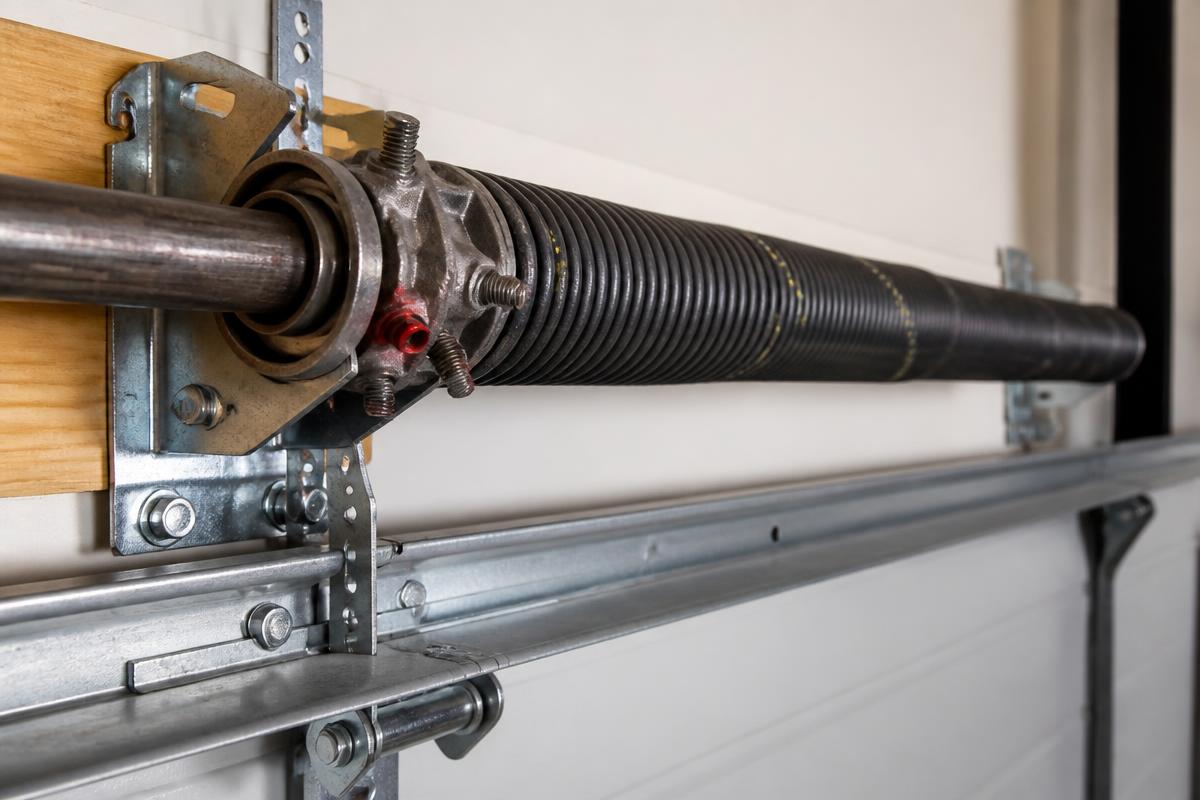
Garage door springs do the lifting. The opener only guides the door; the springs counterbalance its weight so the system moves smoothly. A typical residential door weighs well over a hundred pounds, and heavier insulated or double doors weigh considerably more. When a spring breaks, that entire weight transfers to the opener, the cables and anyone trying to lift the door.
Torsion springs mount on a shaft above the door opening and wind under tension. Extension springs run along the horizontal tracks and stretch as the door closes. Both are wear items rated in cycles, and both store enough energy to cause serious injury if handled without the correct tools and technique.
Spring service includes measuring the door and confirming the correct spring specification, replacing worn components in pairs where appropriate, re-winding to the correct tension, and re-testing door balance so the opener is not left carrying load it was never designed to lift.
Common signs
- A loud bang from the garage, followed by a door that will not open
- A visible gap or separation in the coiled spring above the door
- The door lifts a few inches and stops or feels extremely heavy
- The opener strains, hums or reverses immediately
- The door slams down instead of lowering under control
- Cables have gone slack or come off the drums
Common causes
- Cycle fatigue — every open and close uses part of the spring's rated life
- Corrosion and moisture pitting the spring wire
- Undersized springs for the door's actual weight
- Added door weight, such as insulation or a heavier panel
- Lack of lubrication increasing internal friction
- Temperature swings adding stress to already-fatigued metal
Our inspection
- Confirm spring type, wire size, inside diameter and length
- Weigh or calculate the door to verify correct spring rating
- Inspect the shaft, bearings, drums and end brackets
- Check cable condition and drum seating
- Verify opener force settings after the repair
- Balance test the door at multiple heights
The process
- Secure the door and release stored tension safely
- Remove the failed spring and inspect related hardware
- Install correctly specified replacement springs
- Wind to the manufacturer-appropriate tension
- Re-seat and tension the lift cables
- Balance test, then re-check opener force and reversal
Risks of delaying service
- A door with a broken spring can drop without warning
- Running the opener with a broken spring can damage the gear assembly
- Uneven tension pulls the door out of square and wears the tracks
- Cables can jump the drums, leading to an off-track door
Related components
- Torsion springs
- Extension springs
- Torsion shaft and bearings
- Cable drums
- Lift cables
- Center and end bearing plates
Where this service applies
Single and double residential doors, and insulated and non-insulated sectional doors using torsion assemblies.
Frequently asked questions
- Can I replace a garage door spring myself?
- This is not a do-it-yourself repair. Torsion and extension springs store a large amount of energy and require specific winding bars, measurements and technique. Spring work should be handled by a trained professional.
- Should both springs be replaced at once?
- On a two-spring system, both springs have accumulated similar cycles. Replacing them together is commonly recommended so the door stays balanced and the second spring does not fail shortly after the first.
- Can I still use the door with a broken spring?
- No. The door is extremely heavy without spring counterbalance, and forcing the opener to lift it can damage the opener and the door.
Broken Garage Door Spring Repair near me in Northeast Ohio
Searching for broken garage door spring repair near me? Garage Door Medic is a mobile garage door company based in Chardon, Ohio, serving homeowners across Geauga, Lake, Cuyahoga, Portage and Ashtabula counties. Pick your community below for local details, or call 440-478-5350.
- Broken Garage Door Spring Repair in Cleveland, OH
- Broken Garage Door Spring Repair in Mentor, OH
- Broken Garage Door Spring Repair in Chardon, OH
- Broken Garage Door Spring Repair in Chagrin Falls, OH
- Broken Garage Door Spring Repair in Aurora, OH
- Broken Garage Door Spring Repair in Solon, OH
- Broken Garage Door Spring Repair in Painesville, OH
- Broken Garage Door Spring Repair in Willoughby, OH
- Broken Garage Door Spring Repair in Chesterland, OH
- Broken Garage Door Spring Repair in Kirtland, OH
- Broken Garage Door Spring Repair in Madison, OH
Broken Garage Door Spring Repair in Geauga County County
- Broken Garage Door Spring Repair Chardon, OH
- Broken Garage Door Spring Repair Chesterland, OH
- Broken Garage Door Spring Repair Middlefield, OH
- Broken Garage Door Spring Repair Burton, OH
- Broken Garage Door Spring Repair Bainbridge, OH
- Broken Garage Door Spring Repair Newbury, OH
- Broken Garage Door Spring Repair Russell Township, OH
- Broken Garage Door Spring Repair Munson Township, OH
- Broken Garage Door Spring Repair Auburn Township, OH
- Broken Garage Door Spring Repair Claridon Township, OH
- Broken Garage Door Spring Repair Novelty, OH
Broken Garage Door Spring Repair in Lake County County
- Broken Garage Door Spring Repair Mentor, OH
- Broken Garage Door Spring Repair Painesville, OH
- Broken Garage Door Spring Repair Willoughby, OH
- Broken Garage Door Spring Repair Eastlake, OH
- Broken Garage Door Spring Repair Wickliffe, OH
- Broken Garage Door Spring Repair Willowick, OH
- Broken Garage Door Spring Repair Kirtland, OH
- Broken Garage Door Spring Repair Madison, OH
- Broken Garage Door Spring Repair Perry, OH
- Broken Garage Door Spring Repair Fairport Harbor, OH
- Broken Garage Door Spring Repair Concord Township, OH
- Broken Garage Door Spring Repair Mentor-on-the-Lake, OH
Broken Garage Door Spring Repair in Cuyahoga County County
- Broken Garage Door Spring Repair Cleveland, OH
- Broken Garage Door Spring Repair Euclid, OH
- Broken Garage Door Spring Repair Cleveland Heights, OH
- Broken Garage Door Spring Repair University Heights, OH
- Broken Garage Door Spring Repair Beachwood, OH
- Broken Garage Door Spring Repair Solon, OH
- Broken Garage Door Spring Repair Mayfield Heights, OH
- Broken Garage Door Spring Repair Lyndhurst, OH
- Broken Garage Door Spring Repair Richmond Heights, OH
- Broken Garage Door Spring Repair Highland Heights, OH
- Broken Garage Door Spring Repair Gates Mills, OH
- Broken Garage Door Spring Repair Pepper Pike, OH
- Broken Garage Door Spring Repair Orange, OH
- Broken Garage Door Spring Repair Chagrin Falls, OH
- Broken Garage Door Spring Repair Bedford, OH
- Broken Garage Door Spring Repair Garfield Heights, OH
- Broken Garage Door Spring Repair Parma, OH
- Broken Garage Door Spring Repair Strongsville, OH
Broken Garage Door Spring Repair in Portage County County
- Broken Garage Door Spring Repair Aurora, OH
- Broken Garage Door Spring Repair Streetsboro, OH
- Broken Garage Door Spring Repair Ravenna, OH
- Broken Garage Door Spring Repair Kent, OH
- Broken Garage Door Spring Repair Mantua, OH
- Broken Garage Door Spring Repair Garrettsville, OH
- Broken Garage Door Spring Repair Hiram, OH
- Broken Garage Door Spring Repair Rootstown, OH
- Broken Garage Door Spring Repair Windham, OH
- Broken Garage Door Spring Repair Brimfield, OH
Broken Garage Door Spring Repair in Ashtabula County County
- Broken Garage Door Spring Repair Ashtabula, OH
- Broken Garage Door Spring Repair Geneva, OH
- Broken Garage Door Spring Repair Conneaut, OH
- Broken Garage Door Spring Repair Jefferson, OH
- Broken Garage Door Spring Repair Orwell, OH
- Broken Garage Door Spring Repair Andover, OH
- Broken Garage Door Spring Repair North Kingsville, OH
- Broken Garage Door Spring Repair Saybrook Township, OH
- Broken Garage Door Spring Repair Austinburg, OH
- Broken Garage Door Spring Repair Roaming Shores, OH
- Broken Garage Door Spring Repair Geneva-on-the-Lake, OH
Helpful guides
- 24 hour garage door repair
- Garage door opener installation
- Garage door opener guide
- Troubleshooting guide
- Repair cost guide
- Winter garage door guide
- Common garage door problems