
Garage Door Hinge Replacement
Hinges hold the sections together and carry the rollers. Damaged hinges let panels flex, elongate mounting holes and pull the door out of alignment.
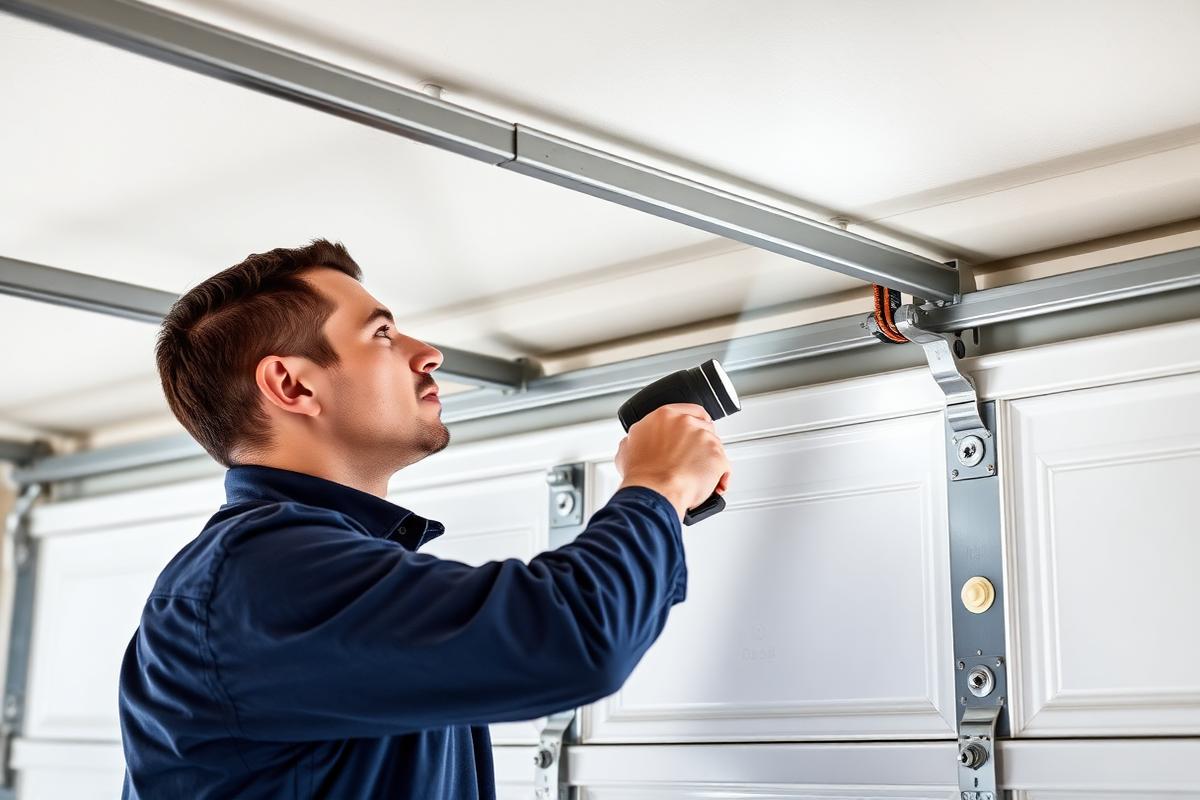
Garage door hinges are numbered by position and carry different loads depending on where they sit on the door. They allow each section to pivot as the door transitions from vertical to horizontal travel, and they anchor the rollers that keep the door in the track.
When a hinge cracks or its roller pocket elongates, the section it supports begins to shift. That movement shows up as a snapping sound near the top of travel, visible gaps between sections, or screw holes that have widened in the panel.
Hinge service includes identifying the correct hinge numbers for each position, checking for panel damage around the mounting points, and reinforcing or replacing hardware so the sections track together again.
Common signs
- A snapping or popping sound as sections pivot
- Visible cracks or bends in a hinge
- Elongated or enlarged screw holes in the panel
- Gaps opening between door sections
- A roller tipping out of the track
- Rust or separation at the hinge leaves
Common causes
- Cycle fatigue on high-use doors
- Corrosion from humidity and road salt
- Extra stress from an unbalanced door
- Impact damage from a vehicle or object
- Incorrect hinge number installed at a position
- Loose fasteners allowing the hinge to work back and forth
Our inspection
- Inspect every hinge and its mounting points
- Verify hinge numbering by position
- Check panel condition around fasteners
- Inspect rollers seated in each hinge
- Check door balance and spring tension
- Verify square alignment in the opening
The process
- Support the door and isolate the affected section
- Remove the damaged hinge and inspect the panel
- Install correctly numbered replacement hinges
- Add reinforcement where fastener holes are worn
- Re-seat rollers and confirm track engagement
- Cycle and test the door with the opener
Risks of delaying service
- A failed hinge can let a section separate under load
- Elongated holes spread damage into the panel itself
- Misaligned sections wear rollers and tracks quickly
- Continued use can turn a hardware repair into a panel replacement
Related components
- Numbered hinges
- End hinges and roller carriers
- Panel fasteners
- Rollers
- Struts and reinforcement
Where this service applies
Residential steel, insulated and carriage-style sectional doors, including heavier double doors with reinforced hinge hardware.
Frequently asked questions
- Why are garage door hinges numbered?
- Each number corresponds to a position on the door and a specific roller offset. Using the wrong number changes how the section sits in the track and can cause binding.
- Can a cracked hinge damage the door panel?
- Yes. A cracked hinge lets the section move independently, which enlarges fastener holes and can bend or tear the sheet metal around them.
- Is hinge replacement a quick repair?
- Individual hinge replacement is usually straightforward, but the inspection matters more than the part — a cracked hinge often points to an unbalanced door or worn rollers.
Garage Door Hinge Replacement near me in Northeast Ohio
Searching for garage door hinge replacement near me? Garage Door Medic is a mobile garage door company based in Chardon, Ohio, serving homeowners across Geauga, Lake, Cuyahoga, Portage and Ashtabula counties. Pick your community below for local details, or call 440-478-5350.
Garage Door Hinge Replacement in Geauga County County
- Garage Door Hinge Replacement Chardon, OH
- Garage Door Hinge Replacement Chesterland, OH
- Garage Door Hinge Replacement Middlefield, OH
- Garage Door Hinge Replacement Burton, OH
- Garage Door Hinge Replacement Bainbridge, OH
- Garage Door Hinge Replacement Newbury, OH
- Garage Door Hinge Replacement Russell Township, OH
- Garage Door Hinge Replacement Munson Township, OH
- Garage Door Hinge Replacement Auburn Township, OH
- Garage Door Hinge Replacement Claridon Township, OH
- Garage Door Hinge Replacement Novelty, OH
Garage Door Hinge Replacement in Lake County County
- Garage Door Hinge Replacement Mentor, OH
- Garage Door Hinge Replacement Painesville, OH
- Garage Door Hinge Replacement Willoughby, OH
- Garage Door Hinge Replacement Eastlake, OH
- Garage Door Hinge Replacement Wickliffe, OH
- Garage Door Hinge Replacement Willowick, OH
- Garage Door Hinge Replacement Kirtland, OH
- Garage Door Hinge Replacement Madison, OH
- Garage Door Hinge Replacement Perry, OH
- Garage Door Hinge Replacement Fairport Harbor, OH
- Garage Door Hinge Replacement Concord Township, OH
- Garage Door Hinge Replacement Mentor-on-the-Lake, OH
Garage Door Hinge Replacement in Cuyahoga County County
- Garage Door Hinge Replacement Cleveland, OH
- Garage Door Hinge Replacement Euclid, OH
- Garage Door Hinge Replacement Cleveland Heights, OH
- Garage Door Hinge Replacement University Heights, OH
- Garage Door Hinge Replacement Beachwood, OH
- Garage Door Hinge Replacement Solon, OH
- Garage Door Hinge Replacement Mayfield Heights, OH
- Garage Door Hinge Replacement Lyndhurst, OH
- Garage Door Hinge Replacement Richmond Heights, OH
- Garage Door Hinge Replacement Highland Heights, OH
- Garage Door Hinge Replacement Gates Mills, OH
- Garage Door Hinge Replacement Pepper Pike, OH
- Garage Door Hinge Replacement Orange, OH
- Garage Door Hinge Replacement Chagrin Falls, OH
- Garage Door Hinge Replacement Bedford, OH
- Garage Door Hinge Replacement Garfield Heights, OH
- Garage Door Hinge Replacement Parma, OH
- Garage Door Hinge Replacement Strongsville, OH
Garage Door Hinge Replacement in Portage County County
- Garage Door Hinge Replacement Aurora, OH
- Garage Door Hinge Replacement Streetsboro, OH
- Garage Door Hinge Replacement Ravenna, OH
- Garage Door Hinge Replacement Kent, OH
- Garage Door Hinge Replacement Mantua, OH
- Garage Door Hinge Replacement Garrettsville, OH
- Garage Door Hinge Replacement Hiram, OH
- Garage Door Hinge Replacement Rootstown, OH
- Garage Door Hinge Replacement Windham, OH
- Garage Door Hinge Replacement Brimfield, OH
Garage Door Hinge Replacement in Ashtabula County County
- Garage Door Hinge Replacement Ashtabula, OH
- Garage Door Hinge Replacement Geneva, OH
- Garage Door Hinge Replacement Conneaut, OH
- Garage Door Hinge Replacement Jefferson, OH
- Garage Door Hinge Replacement Orwell, OH
- Garage Door Hinge Replacement Andover, OH
- Garage Door Hinge Replacement North Kingsville, OH
- Garage Door Hinge Replacement Saybrook Township, OH
- Garage Door Hinge Replacement Austinburg, OH
- Garage Door Hinge Replacement Roaming Shores, OH
- Garage Door Hinge Replacement Geneva-on-the-Lake, OH
Helpful guides
- 24 hour garage door repair
- Garage door opener installation
- Garage door opener guide
- Troubleshooting guide
- Repair cost guide
- Winter garage door guide
- Common garage door problems